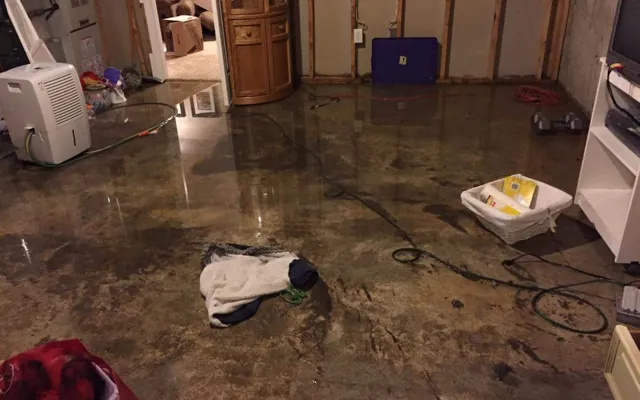
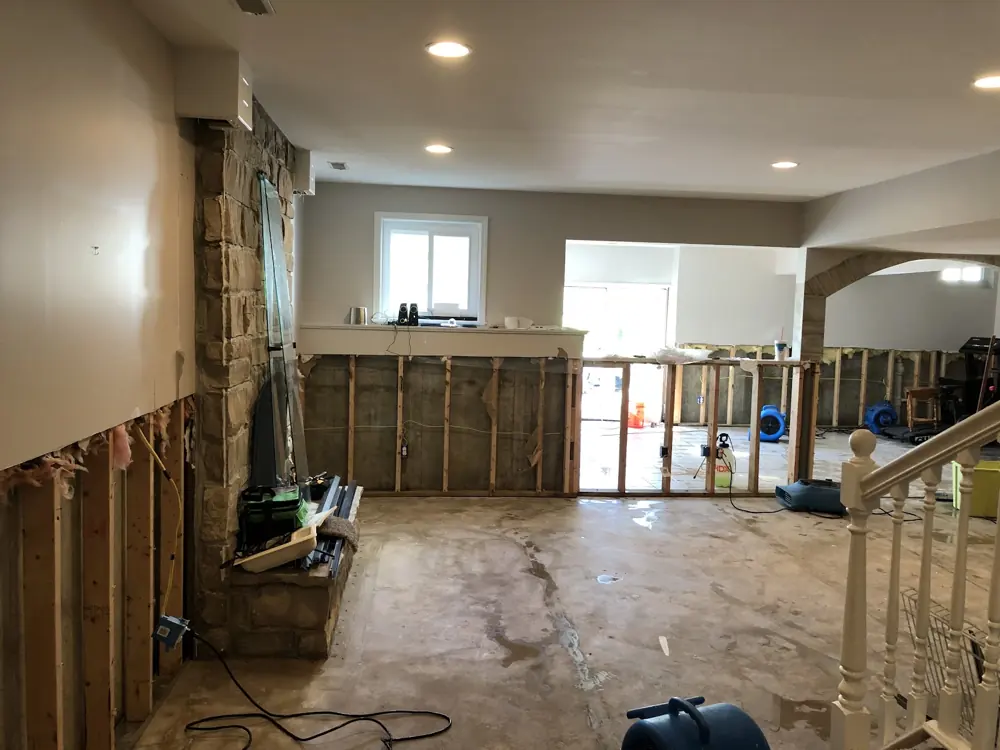
Whether it sits in a garage, a utility closet, or an attic platform, a failed water heater can empty dozens of gallons in a short time. Apopka crews respond around the clock to extract the water and check how far it traveled before the tank was shut off.

The crew confirms the water supply to the tank is off and checks for any electrical hazard before beginning extraction, especially in garage installations.
Water is extracted from the garage, closet, or affected room floor, along with any water that pooled around the base of the unit.
For attic-mounted units, the ceiling below is checked and, if needed, opened to dry the cavity and remove wet insulation.
Air movers and dehumidifiers dry affected flooring, baseboards, or ceiling drywall to a verified target, with readings logged for the claim.

While help is on the way, these first steps, done only where it is safe, limit the damage and protect the insurance claim.
Shut the supply off at the source, or close the home's main valve if the source is not obvious. Stopping the flow limits the damage more than anything else.
Switch off electricity to the affected area, but only if the breaker can be reached without standing in or touching the water.
Get a crew dispatched right away. The sooner extraction and drying begin, the more flooring, drywall, and belongings can be saved.
Take photos and a short video of the water and the affected rooms before anything is moved, so the insurance claim starts strong.
Water heater leak cleanup in the Apopka area typically runs from about $500 to $2,800 depending on whether the leak was contained to a garage or closet or reached a ceiling cavity below an attic unit, and how much flooring or drywall was affected. A garage-floor leak caught quickly sits toward the low end, while an attic-unit failure that soaked ceiling drywall and insulation in the room below sits toward the high end. Sudden tank failures are commonly covered under a standard homeowners policy; the water heater replacement itself is typically a separate plumbing expense.
Crews reach Apopka, Orange and Lake counties, and the nearby northwest Orlando metro fast, from South Apopka, Clarcona, and Forest City to Wekiwa Springs, Ocoee, Winter Garden, and Altamonte Springs. See the full list on the areas served across Apopka page.
See all areas servedEvery loss is photographed, measured, and logged from the first visit, so the paperwork holds up with the insurance carrier.
Technicians follow recognized IICRC drying standards and prove it with daily moisture readings on Apopka homes, not guesswork.
Emergency dispatch any hour of the day or night, with a real crew on the way across the northwest Orlando metro, not a callback in the morning.
A real crew dispatched any hour, not a callback in the morning.
Trained technicians following recognized IICRC drying standards.
Truck-mounted, portable, and submersible for any size loss.
The loss is documented and billed to the carrier directly.
Most commonly in a garage or a utility closet, with some homes using an attic platform installation, each of which spreads water differently when a failure occurs.
In terms of the interior damage, yes. Both soak the ceiling drywall and insulation below and are handled with the same relief, extraction, and drying approach.
Sudden tank failures are commonly covered under a standard homeowners policy for the resulting water damage, while the tank replacement itself is typically a separate, uncovered plumbing cost.
Concrete itself is not usually damaged, but stored items, drywall along the base of the wall, and any adjoining carpeted or tiled rooms can be affected and need drying or removal.
As soon as it is discovered and safe to do so. Shutting off the water supply and, if accessible, the power or gas to the unit limits how much water is released before the crew arrives.
Apopka crews are on call 24 hours a day, local and fast, and can be on the way within the hour.
Call (321) 359-8276