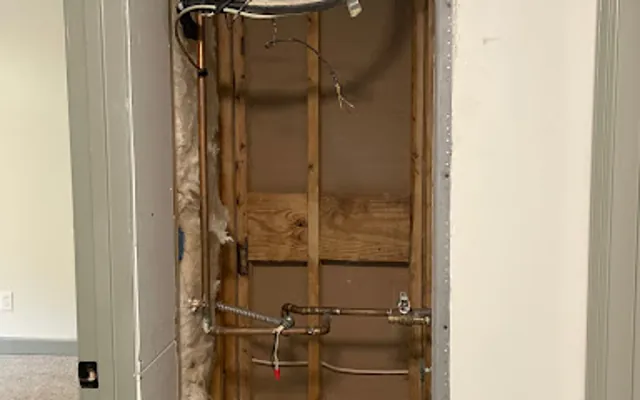
The small braided line feeding a sink, toilet, ice maker, or washing machine is one of the most common points of failure in a home, and when it lets go it can run steadily for hours before anyone notices. Apopka crews respond around the clock to stop the water and dry what it reached.

The crew confirms the failed line's shutoff valve is closed and arrives typically within about an hour of the call to begin extraction.
Standing water is extracted from cabinet bases, vanity floors, and any adjoining rooms the water reached.
Meters trace how far water traveled under flooring and baseboards, since supply line leaks often spread further than they appear.
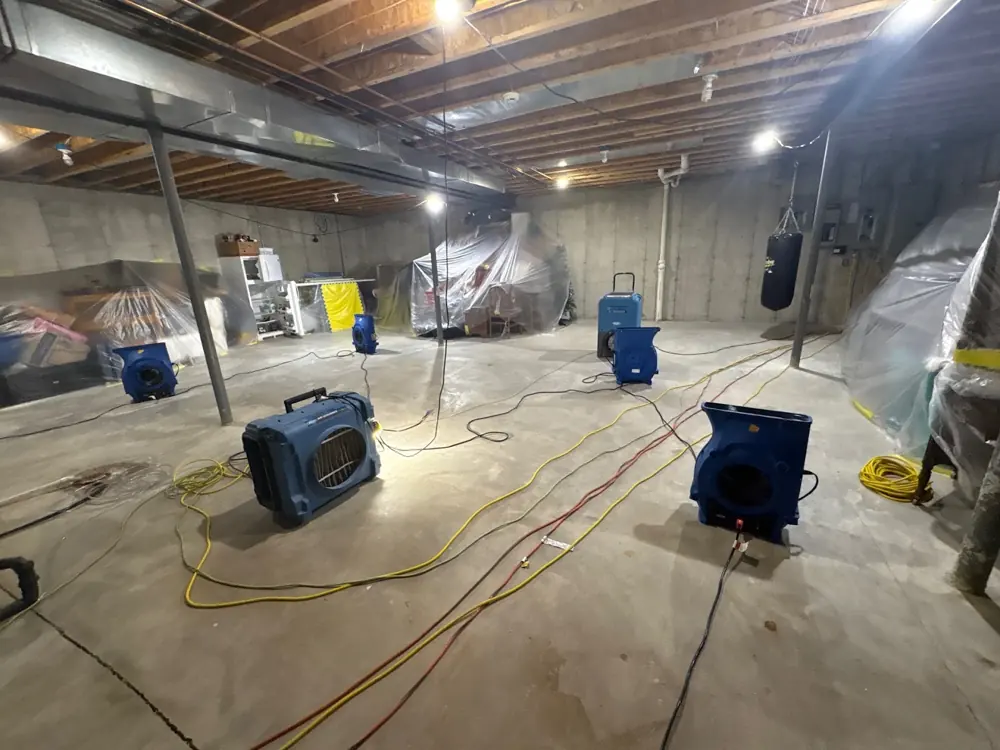
Air movers and dehumidifiers are placed to dry cabinets, subfloor, and wall cavities without unnecessary removal, with daily readings until dry.

While help is on the way, these first steps, done only where it is safe, limit the damage and protect the insurance claim.
Shut the supply off at the source, or close the home's main valve if the source is not obvious. Stopping the flow limits the damage more than anything else.
Switch off electricity to the affected area, but only if the breaker can be reached without standing in or touching the water.
Get a crew dispatched right away. The sooner extraction and drying begin, the more flooring, drywall, and belongings can be saved.
Take photos and a short video of the water and the affected rooms before anything is moved, so the insurance claim starts strong.
Supply line failure cleanup in the Apopka area typically runs from about $500 to $2,500 depending on how long the leak ran before discovery and how far it spread under flooring and cabinetry. A quickly caught kitchen or bathroom leak sits toward the low end, while an overnight or multi-day leak that reached adjoining rooms sits toward the high end. These are commonly covered as sudden accidental water losses under a standard homeowners policy, and moisture documentation supports the claim while the failed line itself is a low-cost plumbing fix.
Crews reach Apopka, Orange and Lake counties, and the nearby northwest Orlando metro fast, from South Apopka, Clarcona, and Forest City to Wekiwa Springs, Ocoee, Winter Garden, and Altamonte Springs. See the full list on the areas served across Apopka page.
See all areas servedEvery loss is photographed, measured, and logged from the first visit, so the paperwork holds up with the insurance carrier.
Technicians follow recognized IICRC drying standards and prove it with daily moisture readings on Apopka homes, not guesswork.
Emergency dispatch any hour of the day or night, with a real crew on the way across the northwest Orlando metro, not a callback in the morning.
A real crew dispatched any hour, not a callback in the morning.
Trained technicians following recognized IICRC drying standards.
Truck-mounted, portable, and submersible for any size loss.
The loss is documented and billed to the carrier directly.
It varies, but overnight or while residents are away, a slow leak can run for many hours, which is why the water damage is often more extensive than the small size of the failed line would suggest.
Water extraction and drying are the focus here; a plumber typically handles the actual line replacement, which is usually a quick, low-cost fix.
Frequently yes, especially if caught within a day. Swollen particleboard panels sometimes need replacing, but the cabinet frame itself can often be dried and kept.
Sudden line failures are commonly covered as accidental water damage under a standard homeowners policy, with moisture documentation supporting the claim.
Grout lines and baseboards act like channels, letting water travel well beyond the visible wet spot on tile or engineered flooring, which is why moisture mapping rather than a visual check determines the true extent.
Apopka crews are on call 24 hours a day, local and fast, and can be on the way within the hour.
Call (321) 359-8276