Apopka's concrete-block homes are built on a slab, not over a basement, so flooding shows up differently here. When storm water pushes indoors or a pipe lets go, it spreads across ground-floor rooms and garages instead of pooling below grade, and it needs the same fast extraction either way.

A crew responds around the clock and is typically on site in about an hour to cut power to affected outlets and check for contamination before entering standing water.
Submersible pumps and truck-mounted units clear water off tile, wood, and garage flooring, prioritizing rooms where water is deepest.
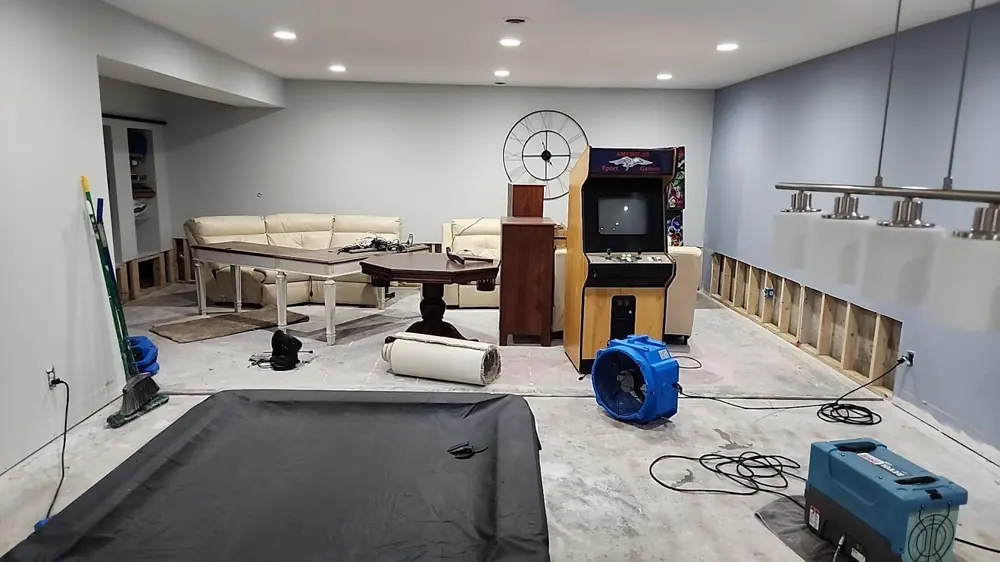
Baseboards are pulled and lower drywall is checked for wicking; flood-cuts are made only where moisture has traveled up the wall cavity.
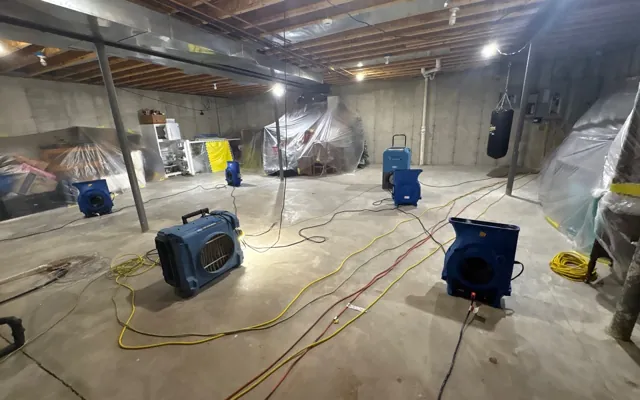
Air movers and dehumidifiers are staged against a moisture target, with daily readings logged for the insurance claim until the slab and framing test dry.

While help is on the way, these first steps, done only where it is safe, limit the damage and protect the insurance claim.
Shut the supply off at the source, or close the home's main valve if the source is not obvious. Stopping the flow limits the damage more than anything else.
Switch off electricity to the affected area, but only if the breaker can be reached without standing in or touching the water.
Get a crew dispatched right away. The sooner extraction and drying begin, the more flooring, drywall, and belongings can be saved.
Take photos and a short video of the water and the affected rooms before anything is moved, so the insurance claim starts strong.
Ground-floor flood cleanup in the Apopka area commonly runs from about $1,500 to $5,000 depending on how many rooms flooded, whether drywall had to be cut out, and how much flooring was affected. A single flooded garage or Florida room sits toward the low end, while a multi-room event after a tropical system sits toward the high end. Insurance coverage depends on the cause; sudden pipe failures are commonly covered, while some storm-surface flooding may fall under a separate flood policy, so the cause is documented carefully from the start.
Crews reach Apopka, Orange and Lake counties, and the nearby northwest Orlando metro fast, from South Apopka, Clarcona, and Forest City to Wekiwa Springs, Ocoee, Winter Garden, and Altamonte Springs. See the full list on the areas served across Apopka page.
See all areas servedEvery loss is photographed, measured, and logged from the first visit, so the paperwork holds up with the insurance carrier.
Technicians follow recognized IICRC drying standards and prove it with daily moisture readings on Apopka homes, not guesswork.
Emergency dispatch any hour of the day or night, with a real crew on the way across the northwest Orlando metro, not a callback in the morning.
A real crew dispatched any hour, not a callback in the morning.
Trained technicians following recognized IICRC drying standards.
Truck-mounted, portable, and submersible for any size loss.
The loss is documented and billed to the carrier directly.
No. The standard local build is a concrete-block home on a slab foundation, so there is essentially no basement housing stock in the Apopka area. Flooding instead affects ground-floor rooms, garages, and occasionally a below-grade utility space in an older home.
The lowest interior points, typically garages, Florida rooms, and tile entryways near exterior doors, since there is no basement to funnel water toward.
The extraction and drying process is similar, though garages often have less drywall and flooring at risk and more focus on the concrete slab and any stored items.
It depends on the cause. Sudden internal water losses, like a burst pipe, are commonly covered under a standard policy, while rising storm-surface water often falls under separate flood insurance, so the cause is documented from the first visit.
Most ground-floor drying is complete in three to five days with equipment running continuously, confirmed by moisture readings rather than a fixed schedule.
Apopka crews are on call 24 hours a day, local and fast, and can be on the way within the hour.
Call (321) 359-8276