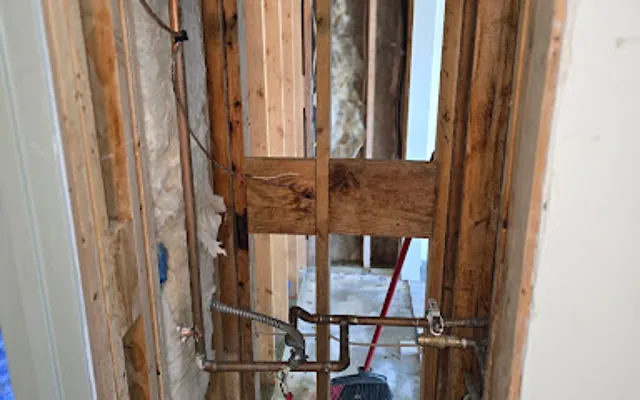
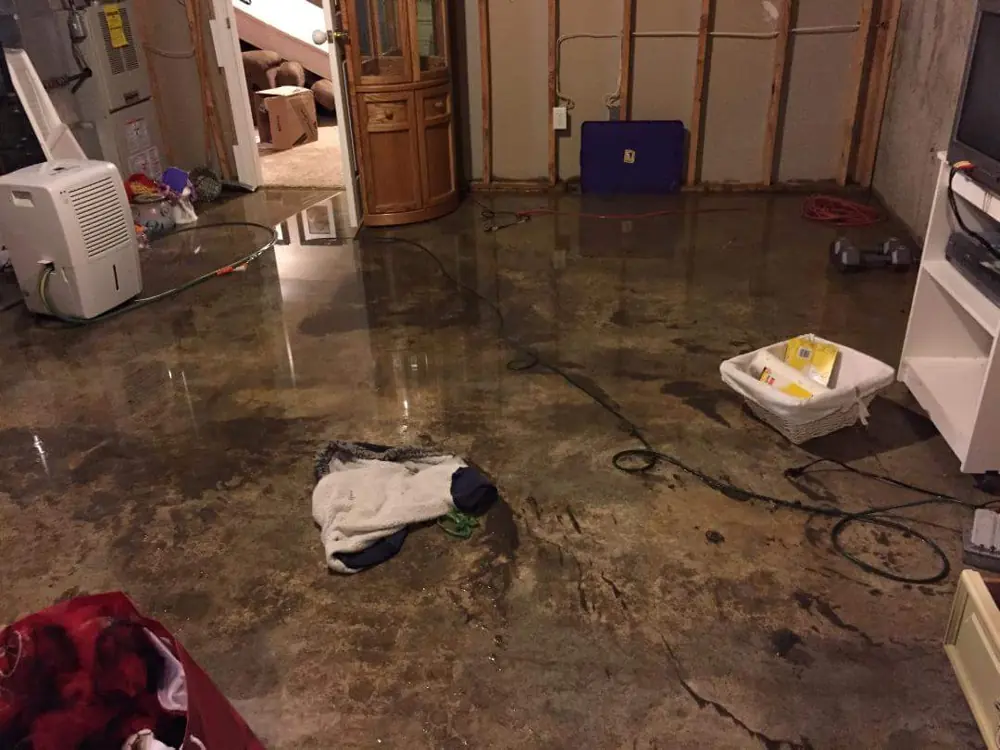
Apopka almost never sees a hard freeze, so a genuinely frozen and burst pipe is uncommon here, but on the rare night temperatures drop hard enough, exposed lines can still crack. When one does, the response is the same fast extraction and drying as any burst pipe.

The crew confirms the water supply is off and identifies the failed section, most often an exposed hose bib, backflow device, or garage line.
Water released once the ice thaws or the crack is discovered is extracted from flooring, cabinetry, or the garage slab.
Moisture meters trace how far water spread into nearby drywall or under flooring before drying begins.
Air movers and dehumidifiers dry the affected area to a verified target, with readings logged for the insurance claim.

While help is on the way, these first steps, done only where it is safe, limit the damage and protect the insurance claim.
Shut the supply off at the source, or close the home's main valve if the source is not obvious. Stopping the flow limits the damage more than anything else.
Switch off electricity to the affected area, but only if the breaker can be reached without standing in or touching the water.
Get a crew dispatched right away. The sooner extraction and drying begin, the more flooring, drywall, and belongings can be saved.
Take photos and a short video of the water and the affected rooms before anything is moved, so the insurance claim starts strong.
When a true freeze-related pipe failure does happen in the Apopka area, cleanup typically runs from about $800 to $3,000 depending on whether the break was in an exposed exterior line or reached interior drywall and flooring. An exterior hose bib or irrigation break sits toward the low end, while a cracked line inside an unconditioned garage wall that reached interior space sits toward the high end. Sudden freeze-related pipe failures are commonly covered under a standard homeowners policy, similar to any other sudden pipe burst, with moisture documentation supporting the claim.
Crews reach Apopka, Orange and Lake counties, and the nearby northwest Orlando metro fast, from South Apopka, Clarcona, and Forest City to Wekiwa Springs, Ocoee, Winter Garden, and Altamonte Springs. See the full list on the areas served across Apopka page.
See all areas servedEvery loss is photographed, measured, and logged from the first visit, so the paperwork holds up with the insurance carrier.
Technicians follow recognized IICRC drying standards and prove it with daily moisture readings on Apopka homes, not guesswork.
Emergency dispatch any hour of the day or night, with a real crew on the way across the northwest Orlando metro, not a callback in the morning.
A real crew dispatched any hour, not a callback in the morning.
Trained technicians following recognized IICRC drying standards.
Truck-mounted, portable, and submersible for any size loss.
The loss is documented and billed to the carrier directly.
It is rare. Apopka's humid subtropical climate means sustained hard freezes happen only occasionally, on isolated overnight cold snaps rather than as a normal winter pattern.
Exposed hose bibs, irrigation backflow devices, and any piping running through an unconditioned garage or attic, since interior plumbing in Central Florida homes is not built with the freeze protection common in colder regions.
Not really. Once the water is released, the extraction, moisture mapping, and drying process is the same as for any other sudden pipe failure.
By far the most common causes locally are summer thunderstorm flooding, hurricane-season storms, corroded or pressurized pipe bursts, and appliance or fixture supply line failures, not freezing.
Sudden freeze-related failures are commonly covered under a standard homeowners policy in the same way any other sudden pipe burst would be, with the cause documented to support the claim.
Apopka crews are on call 24 hours a day, local and fast, and can be on the way within the hour.
Call (321) 359-8276