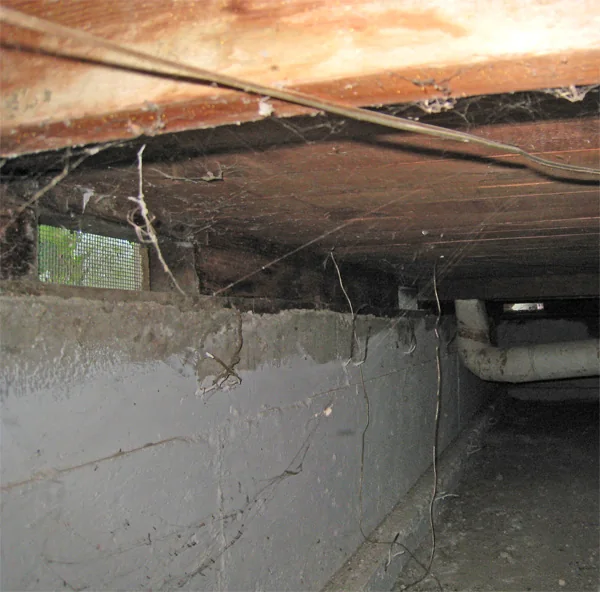
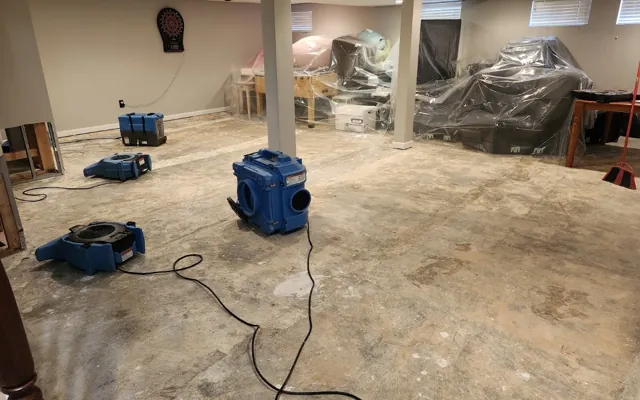
When a crawlspace floods in Longwood, FL, rapid response keeps mold at bay. Local crews follow IICRC-standard methods to extract water, remove soaked materials, and thoroughly dry the space, protecting the home's structure and indoor air quality.

Technicians access the Longwood crawlspace to document the water source and depth. They check for saturated insulation and any visible mold growth on joists or the subfloor, creating a plan for removal.
Submersible pumps and extractors pull standing water from the floor. Technicians then remove any wet batt insulation, which traps moisture against the wood and will not dry properly in the humid environment.
Industrial dehumidifiers and air movers are placed in the crawlspace. The crew monitors wood moisture content and humidity until levels meet a verified dry standard, protecting the home's structure.

Crawlspace water removal in the Longwood area typically runs from about $800 to $3,000 depending on the size of the space, how deep the standing water was, and how much insulation needs to be replaced. A shallow, quickly discovered pooling sits toward the low end, while a crawlspace that held water for an extended period with mold growth and soaked insulation sits toward the high end. Coverage depends on the cause; sudden plumbing-related water is more commonly covered than gradual ground saturation from heavy rain, so the source is documented carefully.
In Longwood, FL, homes range from historic downtown buildings with older plumbing to newer subdivisions built on the area's flat terrain. This mix makes crawlspace water removal a common need, as aging pipes can leak and the region's high humidity slows natural drying, requiring professional intervention. Longwood's older buildings have aging plumbing prone to leaks, while newer homes see appliance failures. The flat, humid Central Florida climate means water from any source can pool in a crawlspace and linger, promoting rapid mold growth on wooden structures. From Longwood, crews also cover nearby Casselberry, Fern Park, Oakland, Montverde, Mount Dora, Gotha. See every neighborhood and town on the full service area page.
See all areas servedEvery loss is photographed, measured, and logged from the first visit, so the paperwork holds up with the insurance carrier.
Technicians follow recognized IICRC drying standards and prove it with daily moisture readings on Longwood homes, not guesswork.
Emergency dispatch any hour of the day or night, with a real crew on the way across the northwest Orlando metro, not a callback in the morning.
A real crew dispatched any hour, not a callback in the morning.
Trained technicians following recognized IICRC drying standards.
Truck-mounted, portable, and submersible for any size loss.
The loss is documented and billed to the carrier directly.
Costs vary based on the job's size and severity. For Longwood homes, a straightforward removal of shallow water may start around $800, while a space with deep, long standing water and extensive wet insulation can approach $3,000. The source of water is documented as it affects insurance coverage.
Drying time depends on the water volume, materials affected, and local humidity. For a typical job in the area, crews plan for two to four days of active drying with equipment running. They use moisture meters to verify the wood and space are dry before removing the equipment.
Crews are on call 24 hours a day and can be on the way to Longwood within the hour.
Call (321) 359-8276